
The cost of hiring a VMS board in Australia (Melbourne, Sydney, Brisbane, Adelaide Perth) can vary depending on factors such as the size, features, and brand of the board, as well as the location and duration of the hire. On average, a basic VMS board can cost anywhere from $315 to $600 per week to hire, while more advanced boards with more features can cost $1000 or more per week. Contact Media Dash for your next VMS Sign/ VMS Board quote to get the best pricing.
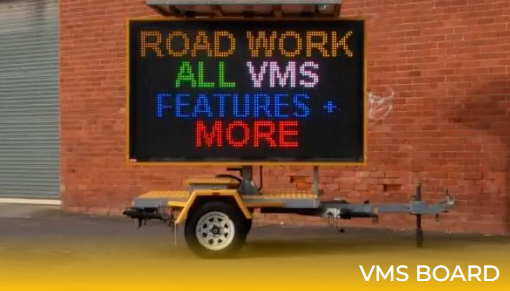
What is a VMS board?
Did you know that some of the most critical information you see on the road, from sudden traffic jams to emergency alerts, is controlled remotely and updated in real time within seconds? And that is made possible by Variable Message Sign (VMS) boards. Also called electronic message boards or digital traffic signs, VMS boards are advanced electronic displays capable of showing text, symbols, or graphics. They are used by transportation authorities, municipalities, and businesses to alert about road hazards, regulate traffic flow during peak hours or construction, issue emergency notifications during natural disasters, and even display targeted commercial or informational messages to the public.
To learn more about VMS boards, keep reading this blog. We will explore how VMS boards work, the different types available, how they compare to traditional signage, and the benefits they offer.
How VMS Boards Work?
These boards use electronic components and primarily employ light-emitting diode (LED) technology, known for its high visibility, energy efficiency, and durability in various weather conditions. The operation of a VMS board typically involves the following components:
Control System – This is the brain of the VMS board. It allows operators to program messages either locally through an on-site console or remotely via computer software or cloud-based platforms. Modern control systems can schedule messages in advance, automate alerts based on sensor data, or integrate with traffic management systems.
Display Panel – The display panel is made up of LED modules or pixels that illuminate to form readable text, symbols, or graphics. High-resolution panels are capable of displaying detailed messages, while standard panels focus on concise alerts for quick comprehension.
Power Source – VMS boards are usually powered by electricity, though some portable models, such as VMS trailers, may use solar panels with battery backups. It ensures continuous operation even in remote locations.
Communication Interface – These boards communicate via wired or wireless connections, allowing operators to modify messages without being physically near the board.
Sensors and Integration – Advanced VMS boards can integrate with traffic sensors, weather monitoring systems, or emergency management platforms. This allows automated message updates, such as displaying “Accident Ahead” when a sensor detects congestion or weather alerts during storms.
Types of VMS Boards
VMS boards come in various designs and formats, each suited for a particular application. Understanding the different types is essential for selecting the right solution for your needs.
1. Fixed VMS Boards
Fixed VMS boards are installed in permanent locations, typically along highways, city streets, or public areas. They are ideal for providing consistent traffic updates, safety messages, and regulatory information. Fixed boards are usually connected to the main electrical grid and can integrate with municipal traffic management systems for automated updates.
2. Portable VMS Boards
These are designed for temporary use, such as in road construction zones, at events, or during emergency situations. Portable VMS boards can be transported and deployed quickly, often mounted on trailers. It features solar-powered batteries to ensure continuous operation in areas without immediate access to electrical power.
3. VMS Trailers
A VMS trailer is a type of portable VMS board mounted on a trailer chassis. VMS trailers combine mobility with visibility, often including features such as outriggers for stability, adjustable display heights, and towable frames for easy relocation. These are commonly used for highway work zones, detours, and public events.
4. Full-Colour LED VMS Boards
For advertising, event management, and public information campaigns, full-colour LED VMS are particularly useful. While traditional VMS boards often display text or simple symbols in monochrome, these full-colour LED VMS boards can display more complex graphics, logos, and colour-coded messages.
5. Matrix VMS Boards
Matrix VMS Boards are a type of variable message signs that use a grid or matrix of LED lights to display scrolling messages, animations, and symbols. They are common in highway and urban traffic management, as they provide high visibility and flexibility for conveying detailed information.
VMS Board vs. Traditional Signage
A common question is how VMS boards differ from traditional signage. While traditional signs, such as printed or painted boards, are effective for conveying static messages, they come with several limitations:
Fixed Messaging – Traditional signage cannot be updated without physically replacing or repainting the sign. In contrast, VMS boards allow instant updates, making them ideal for dynamic conditions.
Limited Interactivity – Printed signs cannot respond to real-time events. VMS boards can integrate with sensors, cameras, and traffic management systems for automated updates.
Reduced Visibility at Night – Traditional signs often rely on reflective materials to be seen at night, while VMS boards are self-illuminated, ensuring clear visibility in all lighting conditions.
Higher Long-Term Efficiency – Although the initial cost of a VMS board may be higher, the ability to update messages remotely reduces labour and material costs over time.
In short, VMS boards provide adaptability, efficiency, and up-to-date communication capabilities that traditional signage cannot match.
Benefits of Using VMS Boards
The adoption of VMS boards offers multiple advantages, including:
Multi-Language Capabilities
In many urban and tourist-heavy areas, people on the road may speak a variety of languages. Standard traffic signs in a single language may not be effective for all drivers or pedestrians, which can create confusion and compromise safety. VMS boards can display messages in multiple languages, ensuring that critical information reaches everyone, regardless of their native tongue.
Supports Data-Driven Decisions
Some advanced VMS boards can collect and transmit traffic or environmental data. These boards can work in tandem with traffic sensors, cameras, and weather monitoring systems to track vehicle flow, congestion patterns, or road conditions. Authorities can then use this data to analyse trends, optimise traffic management, and plan infrastructure improvements. By combining real-time alerts with historical data, municipalities can make smarter, evidence-based decisions that improve safety and efficiency.
Customizable for Specific Needs
One of the greatest advantages of VMS boards is their customizability. They can be programmed to serve a wide range of functions depending on the situation. For instance:
Road Safety Alerts: Displaying accident warnings, speed limits, or detour information.
Parking Guidance: Directing drivers to available parking spaces in busy urban areas.
Event Notifications: Providing scheduled updates, entrance directions, or crowd control instructions at concerts, festivals, or sports events.
24/7 Operation
Unlike manual or static signage, VMS boards operate continuously, day and night. Their bright LED displays remain visible in all lighting conditions, ensuring that important information is always accessible. Whether it’s late-night construction alerts, early morning traffic warnings, or emergency notifications during a storm, VMS boards provide around-the-clock communication.
Take Your Communication to the Next Level with VMS Boards
For businesses and municipal agencies looking to implement or upgrade their signage systems, Media Dash offers VMS board technology solutions to ensure your messages reach the right audience at the right time. In addition, we specialise in dynamic, tactical advertising solutions. Our offerings include mobile billboards, walking boards, and printed & digital bike boards. Contact our team today to learn more about installation, rental, or customisation options.
FAQs
1. What is a VMS Board?
A VMS board, or Variable Message Sign board, is an electronic display system capable of showing dynamic messages, symbols, or graphics.
2. What is the difference between a VMS board and a VMS trailer?
A VMS trailer is a type of portable VMS board mounted on a trailer frame, making it mobile and easy to deploy in temporary locations such as construction zones or public events.
3. Can VMS boards be used for advertising?
Yes, VMS boards, especially full-colour LED and matrix boards, can be used for marketing campaigns and event promotions.
4. What is the purpose of a VMS Trailer?
A VMS trailer provides a mobile, easily deployable solution for displaying real-time messages in road safety, construction, events, or emergency situations.
5. How are VMS boards powered?
VMS boards are powered by grid electricity, solar panels with battery backups, or generators, ensuring continuous operation even in remote locations.